
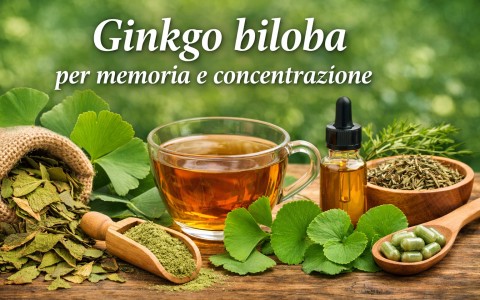
Ginkgo biloba and memory: evidence, preparations, and precautions
When looking for a product to support memory and concentration, Ginkgo often appears as one of the most well-known ingredients.
However, its popularity does not mean that every preparation has the same composition, nor that its benefits are proven for everyone.
To navigate this, it is helpful to distinguish between three aspects: the available evidence, the characteristics of the product, and individual precautions.
Does Ginkgo really improve memory and concentration?
According to the National Center for Complementary and Integrative Health (NCCIH), it remains unclear whether supplements containing Ginkgo improve cognitive performance in healthy individuals.
Many studies on this topic have methodological limitations.
Therefore, it is inaccurate to promise better concentration while studying or improved performance at work to anyone who takes Ginkgo.
Furthermore, large-scale studies have not shown that taking Ginkgo extract reduces the risk of dementia.
Research into dementia symptoms has yielded inconsistent results and pertains to a clinical context distinct from ordinary mental fatigue.
For further information, you can consult the NCCIH fact sheet on Ginkgo.
Why the type of preparation matters
“Ginkgo biloba” refers to the plant itself, but it does not fully describe the product.
Dried leaves, herbal powder, and extracts are different types of preparations.
They differ in their production processes, compositions, and the information required to determine their appropriate use.
A result achieved with a specific extract does not automatically imply that an herbal tea or a powder will produce the same effect.
Even the fact that a product comes in capsule form is not enough to determine its concentration; one must check the specific contents of each capsule.
Extracts in capsules: what information to look for
When evaluating a product in capsule form, check the amount of extract per daily dose, the part of the plant used, and whether the product is standardized (i.e., has a specified concentration of active components). "Titration" refers to the declared quantity of specific components and must be explicitly stated in the product documentation.
The number of capsules in a package, by contrast, simply indicates the total count of units contained.
The product page for *Ginkgo biloba* extract capsules features the Erbologica version, which contains 60 capsules.
For instructions on use and a full list of ingredients, always refer to the most current product label.
Plant powder: why it is not the same as an extract
Grinding reduces plant material into smaller particles; extraction, however, involves a different process.
The term "powder" does not imply a specific concentration, nor can the dosage guidelines for an extract be applied to it.
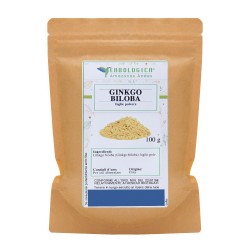
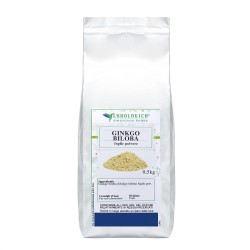
The product page for *Ginkgo biloba* powder lists 100 g, 500 g, and 1000 g sizes.
These figures represent the weight of the package, not the recommended serving size.
Adding the product to smoothies, yogurt, or other beverages should not be advised without first verifying the intended use and the specific instructions provided for that product.
Leaves and herbal teas: a different type of preparation
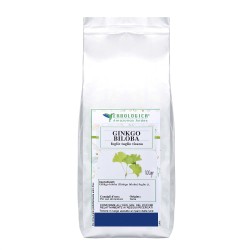
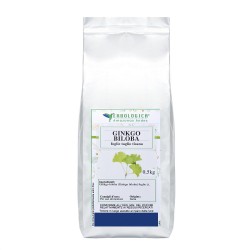
Leaves prepared for herbal tea differ from powder in terms of how the plant material is presented.
Preparing an infusion at home does not automatically replicate the composition of a scientifically studied extract.
Therefore, choosing between herbal tea, powder, or capsules based solely on convenience or personal preference is not appropriate.
Before use, it is essential to understand the characteristics of the preparation and ensure it is suitable for your individual situation.
How to read a product page
A useful product description should clearly identify the plant, the part of the plant used, and the form of the product.
For an extract, the declared quantities and any specific concentration details are also important.
Plant-based origin, large packaging, and a long tradition of use do not, in themselves, guarantee greater efficacy or safety. The category of powdered medicinal herbs encompasses a variety of products; for each item, it is essential to read the specific instructions provided.
Interactions and precautions
Ginkgo may interact with medications and increase the risk of bleeding in individuals taking anticoagulants.
Anyone undergoing medical treatment should consult their doctor or pharmacist before use.
Reported adverse effects associated with these extracts include gastrointestinal disturbances, headaches, and dizziness.
Ginkgo may pose risks during pregnancy; information regarding its safety while breastfeeding is insufficient.
Therefore, the term "plant-based" does not imply that a product is suitable for everyone or free from adverse effects.
Can it be combined with other herbs?
There is no such thing as an inherently superior combination simply because it contains multiple plants.
Combining ginkgo with centella, rosemary, or other products requires an assessment of the individual preparations, the quantities used, and any ongoing medical treatments.
A combination should not be presented as more effective without evidence specifically relating to the formulation in question.
Related Products